
 |
|
|
|
|
 |
|
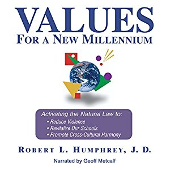
 My son has narrated the last book I wrote.
Please consider listening to it and encouraging others to do so too. (Click on Book Cover) World & Nation $1 Million for Voter Fraud Tips Ending in Convictions President Donald Trump said Monday that people whose reports of voter fraud in past elections or the upcoming midterms lead to arrests and convictions would receive $1 million, making the announcement eight days before voters decide control of Congress on Nov. 3. "Anybody reporting Voter Fraud in the past Elections, or the upcoming 2026 Midterm Election, will be paid $1,000,000 upon the arrest and conviction of those that created the Fraud! Thank you for your attention to this matter. President DONALD J. TRUMP," he wrote on Truth Social. Trump's statement does not identify an administering agency, funding source, or application process. It also does not explain what evidence would qualify, how competing claims would be evaluated, or whether the offer applies to state prosecutions, federal cases, or both.
Senate Races Remain Tight There are "a ton of very close" U.S. Senate races one week before Election Day, Decision Desk HQ's Geoffrey Skelley said on Tuesday. Appearing on "Wake Up America," Skelley, the election forecaster's chief elections analyst, said Republicans remain competitive in several battleground states despite polling that generally favors Democrats, raising the possibility of a long election night. "You've got a number of states where the polling is one, two percentage points," Skelley said. "The races are broadly described as toss-ups, even if one candidate is slightly ahead in our forecasts." Skelley pointed to Texas, where Democrat James Talarico leads Republican Ken Paxton by approximately 2 percentage points, and Michigan, where Democrat Abdul El-Sayed holds a similarly narrow advantage over former Republican Rep. Mike Rogers.
Ukraine lands direct hit on Putin’s missile factory - and Zelensky thanks Trump and Elon In a long conflict, momentum can shift in a matter of hours. Setbacks on the ground often pile up until a sudden breakthrough changes the mood entirely. Over the past few days, a pair of major developments has given one side a fresh reason to celebrate. Ukrainian forces have scored a direct hit on a key Russian weapons plant using British missiles, the Daily Express reported. Combat footage shared from the battlefield appears to show a Storm Shadow missile slamming into the Proton-Electrotex complex in Oryol, Russia, according to The Sun. Feds raid billionaire’s Beverly Hills mansion in dramatic Eric Swalwell probe — as source reveals sex worker link The FBI has raided a Beverly Hills mansion in connection with the investigation into disgraced California politician Eric Swalwell — and sources told The Post it is linked to a sex worker. The Tuesday raid is believed to have targeted the home of billionaire Stephen Cloobeck, who prominently backed Swalwell’s run for governor and even let him stay at his mansion in SoCal. However, when allegations surfaced that former Congressman Swalwell sexually assaulted multiple women including former staffers, Cloobeck changed his mind and booted him out of the house. Ilhan Omar joins 'polarizing and dangerous' streamer at campaign event despite Democratic backlash Rep. Ilhan Omar, D-Minn., is set to share the stage with far-left streamer Hasan Piker on Monday night despite mounting opposition from fellow Minnesota Democrats, some of whom have publicly urged the congresswoman to cancel the appearance just eight days before the midterm elections. Rep. Angie Craig, D-Minn., has called Piker's rhetoric "polarizing and dangerous" and said embracing him is "a mistake," while Sen. Amy Klobuchar's gubernatorial campaign called a number of his past statements "reckless and unacceptable." Other Democratic officials and party groups have gone further, calling on Omar and state Sen. Omar Fateh, who is hosting the sold-out Minneapolis event, to cancel the appearance. The controversy is exposing a divide among Minnesota Democrats in the closing stretch of the midterms over whether Piker's enormous following among younger progressives outweighs the political liability of his past rhetoric. University of Minnesota political science professor Larry Jacobs told FOX 9 the event would "create a split within the DFL," arguing it could distract statewide Democrats from their closing message and put candidates in a difficult position with moderate and Jewish voters. Israel Election Puts Netanyahu's Future at Stake Israelis were voting Tuesday in a tense national election widely seen as a referendum on Prime Minister Benjamin Netanyahu's leadership since the Hamas-led Oct. 7, 2023, attack on Israel and the wars that have since shaken the Middle East. Israelis vote for parties, which then form alliances to create a majority coalition. No single party has ever won a 61-seat majority in the 120-member parliament, or Knesset. Opinion polls suggest a tight race, with no clear winner expected, setting the stage for weeks or even months of negotiations among around a dozen parties expected to win seats in the Knesset. Obama knows better. He just sacrificed 4,000 years of Jewish history First, congratulations are in order for former President Barack Obama on receiving an honorary doctorate from Queen’s University. It is yet another distinguished honor in a remarkable public career. There was hope that Obama might reconsider and retract his remarks made in Belfast on Oct. 13. But with no public retraction to date, a response is necessary. When Obama described the Jewish people as having suffered centuries of persecution, only to then say that “they took land off people and they were excessive,” it raised an obvious question: How could someone with his knowledge of history so fundamentally misrepresent the Jewish people’s connection to their ancestral homeland? Obama knows better. Mike Waltz gets in shouting match with Cuban delegate at UN as American staffer assaulted US Ambassador to the United Nations Mike Waltz got into a shouting match with Cuba’s foreign minister on the floor of the general assembly hall Tuesday as he was detailing the Communist regime’s real estate holdings. As Waltz spoke, Cuban foreign minister Bruno Rodríguez Parrilla charged toward the rostrum and accused Waltz of lying, causing the US envoy to shout: “Back up!” “He’s not going to intimidate me in the United States of America — like he tries to intimidate political prisoners,” said Waltz, raising his voice at Parrilla as UN officials tried to restore order. A video obtained by The Post showed Waltz spokesman J.P. Freire apparently being assaulted by another member of the Cuban delegation who tried to grab Freire’s iPhone as he was recording the confrontation. Iran hosts Saudi defence pact states as Houthis launch more attacks Top officials from Saudi Arabia, Turkey and Pakistan were due in Iran on Monday in a push to de-escalate the regional conflict now afflicting the Gulf kingdom, as Yemen's Houthis launched further attacks on Riyadh's airport and Saudi oil facilities. The talks were the first high-level contact between Iran and the three nations — which signed the Mecca mutual defence pact in August — since a war that began with US and Israeli strikes on Iran also spread to Saudi Arabia and Yemen. The Saudi Foreign Ministry said the visit was part of efforts to "de-escalate" and "promote dialogue and diplomatic solutions". It stressed the need to open negotiating channels to "prevent the return of military escalation". Trump admin slams CBS for leaving out ‘absurd bit of fraud’ from ‘60 Minutes’ profile of deported husband and father The Trump administration slammed a CBS News “60 Minutes” segment on Monday that failed to mention a key reason why an illegal immigrant from Mali was deported to a third country. Moussa Diawara, a married father of two, was deported to Ghana in July, more than a decade after he overstayed a tourist visa and claimed refugee status that barred him from being sent back to his home country of Mali, according to the “60 Minutes” profile. The Department of Homeland Security (DHS) insists the news program left out an “absurd bit of fraud” from Diawara’s asylum application: His claim that he’s gay. The Trump administration took issue with a CBS News “60 Minutes” segment on Monday that failed to mention a key reason why an illegal immigrant from Mali was deported to a third country. China’s economy may never overtake America — and it’s all due to an ill-fated 47-year-old policy Just one child doomed China’s hopes of overtaking the US. The Middle Kingdom, once a surging economic growth engine expected to eclipse the US economy in just a few years, is not expected to outgrow the US until the 2040s now — if it does at all. And it’s largely down to China’s 1979 One Child Policy, which is devastating growth, according to Yi Fuxian, a Chinese demographer at the University of Wisconsin-Madison. Plummeting birth rates and economic problems have erased the 6+% per year growth that China reported before the COVID-19 pandemic. China has a GDP of $21.6 trillion — just two-thirds the size of the US economy. New York’s Kathy Hochul ranked worst governor in US as part of scathing new study Gov. Kathy Hochul was ranked the worst state leader in the US for protecting constituents’ freedoms, a scathing new study found. Hochul ranked No. 50 in the Cato Institute’s 2026 “Freedom in the 50 States” list, scoring an “F” and falling behind the governors from Hawaii, California, Rhode Island and Massachusetts. The annual study weighed the freedom of various state economic and personal policies — such as fiscal, housing, occupational, education, firearms, speech and medical — and graded each state a percentage out of 100 for how its local laws promoted freedoms for each. UK Urges Citizens to Keep 3 Days of Food Stored Britain has advised households to keep enough food and other essential supplies to last three days in the event of a catastrophe, The Guardian has reported. The United Kingdom joins a growing number of countries encouraging people to prepare for disruptions to critical infrastructure and supply chains. The recommendations reflect an increasing emphasis on civilian preparedness as governments warn that emergencies could disrupt electricity, communications, banking systems, transportation, and access to basic necessities. DOJ Files New Espionage Act Case Against Comey Former FBI Director James Comey faces two new federal charges stemming from an alleged 2016 disclosure of classified national defense information to a New York Times reporter, according to court documents unsealed Monday. The Department of Justice filed a criminal information Oct. 5 in U.S. District Court in Washington charging Comey with two violations of the Espionage Act: unlawfully transmitting national defense information and conspiring with others to disclose it. Prosecutors allege that Comey, through one or more co-conspirators, directed an unidentified individual to disclose the information to a reporter on Oct. 5, 2016. Blue states like New York might dash Democrats’ Blue Wave dreams By Isaac Schorr
Could blue states like New York turn out to be the seawall standing in the way of this year’s much-anticipated Blue Wave? It’s not just a pipe dream. The paradox is this: Nationally, polls show voters are dissatisfied with the ever-increasing cost of living, tired of President Donald Trump’s act and ready to punish the GOP. But in places where unified Democratic control of state government has proven disastrous, there’s a lot less optimism about what Democrats would really do with still more power. Is the grass really greener on the other side? Their lives are proof to the contrary. Five reasons Republicans could defy the polls and shock Democrats on Election Day Don't forget, Democrats are still unpopular across the country and Republicans are flush with cash By Liz Peek
Election Day is one week away. Most pundits are ready to declare the midterms over and Democrats the victors. But hold on: There are several reasons Republicans may outperform the gloomy polls and forecasts making headlines. First, Democrats are unpopular. A recent CNN poll showed Democratic favorability at 35%, considerably below the 38% awarded President Trump in the most recent RealClearPolling average. Second, Republicans are flush with campaign cash that is now flowing into tough races across the country. Money doesn’t win elections (see: Kamala Harris), but it can help snag undecided voters. That is true especially in contests like the Michigan Senate race, where little-known Democrat Abdul El-Sayed is facing off against Mike Rogers, a veteran and moderate GOP former congressman. Voters are just now discovering allegations about El-Sayed’s possible family ties to the designated terrorist group, the Muslim Brotherhood, causing the polls to tighten. Fox News recently reported, "El-Sayed has also faced scrutiny over social media posts from his half-sister describing their mother's alleged involvement in Muslim Brotherhood activism in the 1970s. He has denied personal or family ties to the organization and said he was raised by his father and stepmother." |










|